
All Articles
-
The New Reality of Software Development: AI's Impact on Code Quality
The debut episode of the Software Architecture Insights podcast digs into the 2025 GitClear AI Code Quality Research report — 211 million lines of code showing rising duplication and complexity as AI-assisted development spreads.
Read more → -
 AI Hype vs Application Reality: How Architects Can Keep Their Products on Track in 2025
When leadership says "We need AI!", the architect's job is to translate that into a real strategy — not chase the buzzword. A practical checklist for evaluating AI requests, managing up, and accounting for the long-tail cost of maintaining what you build.
Read more → -
Get rid of your users — The Role of Transactional vs Experiential Applications
Experiential applications (social media) want users to linger; transactional applications (e-commerce checkout) want them in and out fast. The two demand opposite architectural priorities — from caching and personalization to data consistency and idempotency.
Read more → -
 Less is More: The Principle of Least Privilege
A two-service message queue example shows why granting only the minimum necessary permissions — write-only for the sender, read-only for the receiver — keeps a compromised service's blast radius as small as possible.
Read more → -
Architecting AI Prompts: A New Skill for Modern Developers
Architecting an AI prompt is now just another step in architecting an application. What makes a prompt effective — clarity, context, relevance, conciseness — plus a short course for developers who want to build the skill deliberately.
Read more → -
 Fortress in the Cloud: How Security Zones Shield Your Data from Cyber Attacks
A flat security model is a reinforced front door on a house with paper-thin walls. Splitting production infrastructure into public, private, and DMZ isolation zones turns what could be a catastrophic breach into a contained, minor incident.
Read more → -
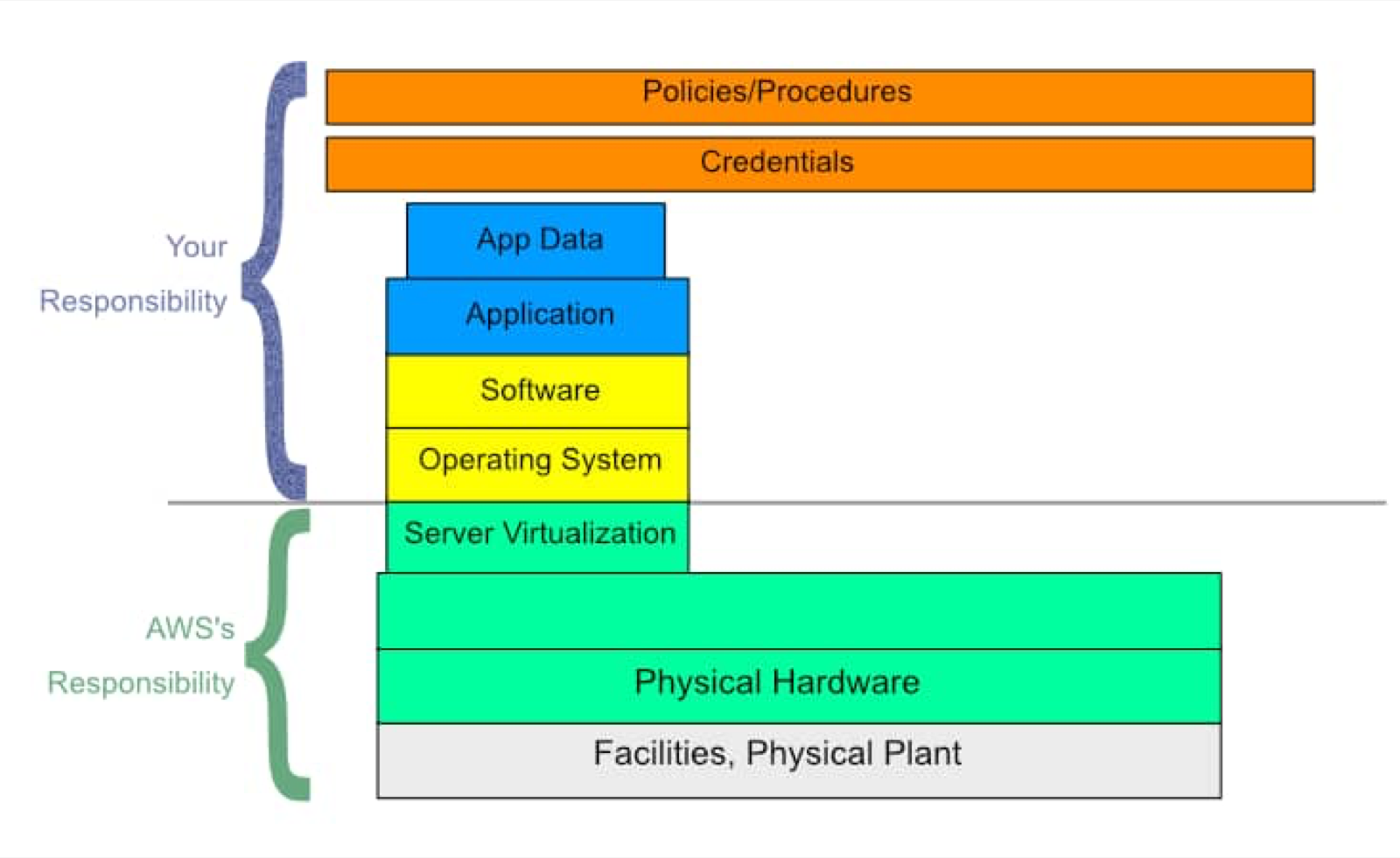 Who’s Responsible? Understanding the Principle of Shared Responsibility
Cloud security is a split contract, not a handoff. Using AWS EC2 vs. RDS as examples, the dividing line between what your cloud provider secures and what you must secure yourself shifts service by service — and you need to know exactly where it falls.
Read more → -
 Beyond the Tab Key: The True Value of Human Developers in an AI World
GitClear's 2025 study of 211 million lines of code found copy/pasted code has overtaken refactored code for the first time in recorded history. As AI generates more code, the human edge shifts to refactoring, system-level understanding, and quality guardianship.
Read more → -
Don’t let your services become Trojan Horses
Microservices multiply your attack surface. A single compromised service, even inside a private network you assumed was safe, can become a Trojan Horse for compromising every neighboring service.
Read more → -
Beyond the Basics: Making Configuration Management Work at Scale
Centralizing your configuration files was step one. At real scale, you need configuration-as-a-service, hierarchies that match your org, dynamic configuration driven by live conditions, and a configuration testing strategy as rigorous as your code testing.
Read more → -
Five Best Practices for Managing Configurations in Cloud-Native Applications
In a microservice-based application, configuration is scattered across network rules, load balancers, security permissions, and application settings. Five best practices — single source of truth, automated variation, revision control, centralization, and automated distribution — for treating configuration as the asset it is.
Read more → -
The Art of Influence: Navigating Technical Debt, Driving Innovation, and Shaping Success
Architects aren't just technical decision makers, they're risk managers whose choices ripple through the whole organization. How they turn technical debt into a strategic lever, drive innovation responsibly, and catalyze success through collaboration rather than top-down dictation.
Read more →