
The Architect's Role
Decision rights, design review, working with multiple architects, organizational design, team dynamics, influence, and career.
-
 When Everything Is Critical, Nothing Is
Reliability isn't only a technical property, it's an ownership property. Two decisions sit underneath every reliable system, what actually matters and who is accountable for keeping it up, and most organizations have made neither.
Read more → -
 The Single-Architect Availability Problem
Reliability engineering asks what happens when a component becomes unavailable. Most organizations never ask that about the person who holds all the architectural context — and the six-week test to find out if you have that single point of failure.
Read more → -
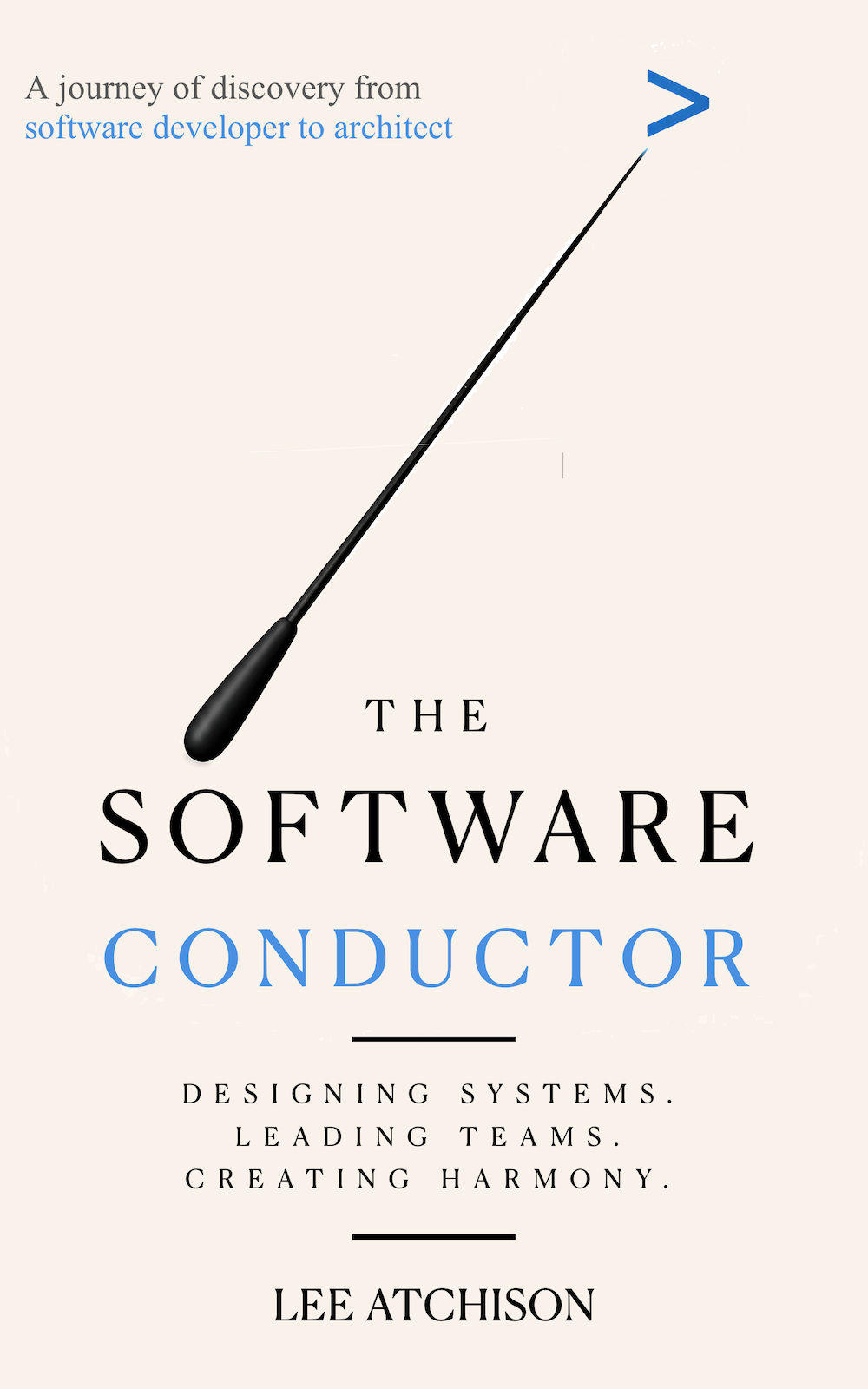 The Lesson at the Heart of The Software Conductor
A conductor who steps off the podium to play an instrument makes the ensemble worse, not better. The Hero Trap — architects jumping in to solve problems themselves instead of building their team's judgment — is the idea at the center of The Software Conductor, and the one that took longest to really land.
Read more → -
 AI Closes the Ticket. But Who Builds the System?
AI coding tools close tickets fast, but GitClear's 2026 research across 623 million code changes shows refactoring down 70% and duplicated code up 81% since 2023. AI doesn't make developers better — it amplifies the habits they already have.
Read more → -
 Your Architectural Style Is Part of Your Architecture
Conway's Law says systems mirror communication structures. The less-discussed corollary: how an architect leads (centralized control vs. distributed judgment) shapes the coupling and evolvability of the system itself, not just the org chart.
Read more → -
 The Move From Execution To Origination
Programmer employment fell more than 27% over two years while the Bureau of Labor Statistics projects growth in design-oriented development roles. The real dividing line isn't AI versus humans — it's execution versus origination, and your career depends on which side you're building toward.
Read more → -
 The Line AI Is Drawing in Your Architecture Team
Most software work sits on a spectrum from execution (implementing a decision already made) to origination (deciding what to build and why). AI is very good at the former and not at all good at the latter — and that asymmetry has real implications for how architecture teams should be structured.
Read more → -
 When the Bill Comes Due: Amazon's AI Bet and the Engineers It Let Go
Amazon laid off thousands of engineers citing AI efficiency gains, then convened an internal "deep dive" after high-severity outages linked to AI-assisted code — including a sentence about GenAI changes quietly deleted from the internal memo. Questions every organization cutting engineering headcount for AI should be asking itself.
Read more → -
 AI Promised 10x Developers. The Reality Is Far More Complicated
A GitClear study of 2,000 developer-weeks finds AI coding tools deliver roughly 25% average productivity gains, concentrated among senior engineers who already knew what they were doing — alongside a 10x jump in code churn that stores up technical debt for later.
Read more → -
 🤖 “We Need an AI Strategy!” What Your Boss Really Means...
When leadership demands an AI strategy, they usually mean "we need innovation" or "we don't want to fall behind." How architects turn that vague directive into concrete questions about business goals, data readiness, alternatives to AI, and who owns ongoing operational cost.
Read more → -
From Finance to Healthcare: Navigating the Shift with Michi Kono
Garner Health CTO Michi Kono joins the podcast to discuss his move from financial-sector tech leadership at Capital One and Stripe into healthcare, and what modernizing data systems in a heavily regulated industry actually requires.
Read more → -
 AI Hype vs Application Reality: How Architects Can Keep Their Products on Track in 2025
When leadership says "We need AI!", the architect's job is to translate that into a real strategy — not chase the buzzword. A practical checklist for evaluating AI requests, managing up, and accounting for the long-tail cost of maintaining what you build.
Read more → -
The Art of Influence: Navigating Technical Debt, Driving Innovation, and Shaping Success
Architects aren't just technical decision makers, they're risk managers whose choices ripple through the whole organization. How they turn technical debt into a strategic lever, drive innovation responsibly, and catalyze success through collaboration rather than top-down dictation.
Read more → -
The Art of Influence: How Software Architects Shape Product Development
A software architect's influence on a product rarely comes from the code they personally write. Like an orchestra conductor, their real leverage is breadth of perspective, coaching teams toward architectural judgment, and setting the standards that shape every decision underneath them.
Read more → -
The Importance of Continuous Learning for Software Architects
The moment you stop learning is the moment you become obsolete as an architect. Five concrete strategies — hands-on experimentation, throwaway code, open source, dedicated study time, and conferences — for staying current.
Read more →