
Scalability & System Design
Scaling and its limits, data partitioning, distributed systems, microservices, managing complexity, technical debt, and evolvability.
-
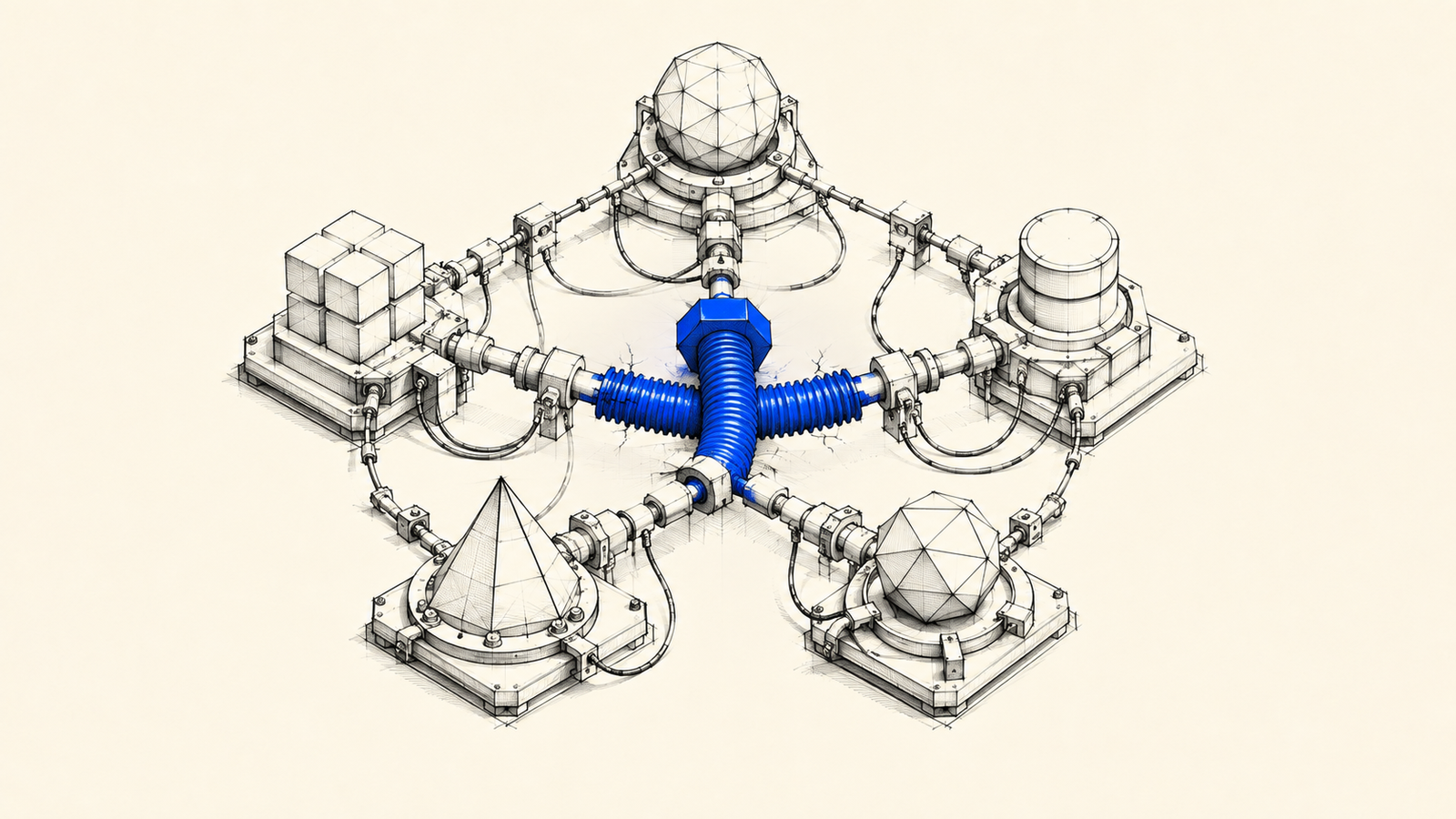 Bolted On, Then Bolted Together
The distributed monolith was the cloud-native failure that looked like success. AI already has its own catalog: the load-bearing prompt, the eval that tests the model instead of the system, RAG on a data model never meant to be retrieved from, the agent with tool access, and the special-case integration. Each one, and the check that finds it.
Read more → -
 Scalability Thinking Has a New Dimension
AI coding assistants let teams move faster, but velocity changes the risk profile of an existing system. Boundary clarity, narrow contracts, and continuous architectural validation are what make a system evolvable at AI speed, not just human speed.
Read more → -
 AI Closes the Ticket. But Who Builds the System?
AI coding tools close tickets fast, but GitClear's 2026 research across 623 million code changes shows refactoring down 70% and duplicated code up 81% since 2023. AI doesn't make developers better — it amplifies the habits they already have.
Read more → -
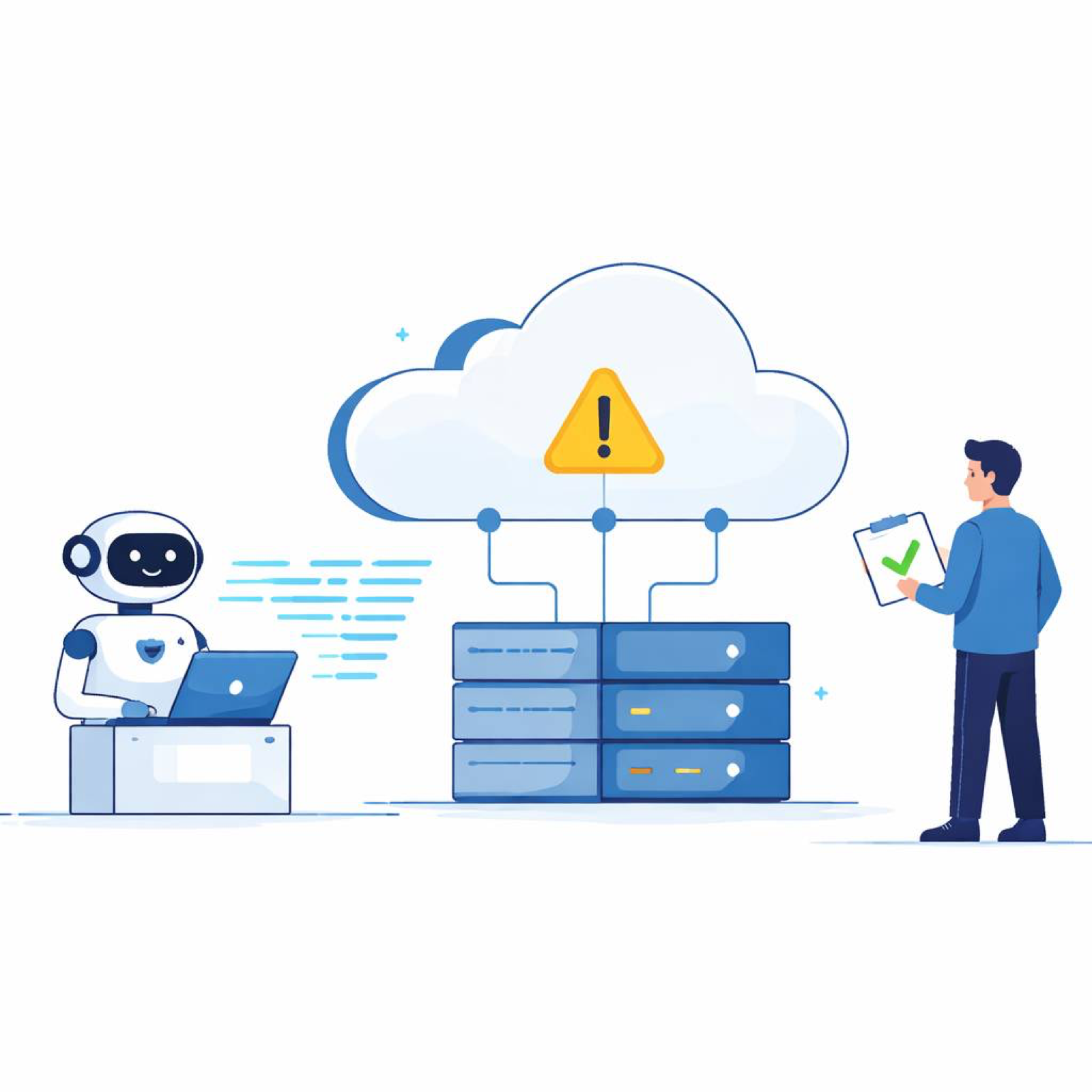 When the Bill Comes Due: Amazon's AI Bet and the Engineers It Let Go
Amazon laid off thousands of engineers citing AI efficiency gains, then convened an internal "deep dive" after high-severity outages linked to AI-assisted code — including a sentence about GenAI changes quietly deleted from the internal memo. Questions every organization cutting engineering headcount for AI should be asking itself.
Read more → -
 AI Promised 10x Developers. The Reality Is Far More Complicated
A GitClear study of 2,000 developer-weeks finds AI coding tools deliver roughly 25% average productivity gains, concentrated among senior engineers who already knew what they were doing — alongside a 10x jump in code churn that stores up technical debt for later.
Read more → -
 The Hidden Costs of Vibe Programming: Why AI-Generated Code Isn't the Shortcut You Think It Is
Vibe-programmed code accumulates as thousands of lines nobody wrote or fully understands. Why that trades short-term velocity for compounding technical debt, hidden security vulnerabilities, and a vicious cycle where teams use AI to understand the AI-written code they can no longer maintain themselves.
Read more → -
 The Hidden Performance Tax of Media Files with Igor Debatur, CEO of Uploadcare
Uploadcare CEO Igor Debatur joins the podcast to unpack why file uploads, which look simple, are actually loaded with security, compliance, and scalability challenges as applications handle ever-larger images and video.
Read more → -
The New Reality of Software Development: AI's Impact on Code Quality
The debut episode of the Software Architecture Insights podcast digs into the 2025 GitClear AI Code Quality Research report — 211 million lines of code showing rising duplication and complexity as AI-assisted development spreads.
Read more → -
Get rid of your users — The Role of Transactional vs Experiential Applications
Experiential applications (social media) want users to linger; transactional applications (e-commerce checkout) want them in and out fast. The two demand opposite architectural priorities — from caching and personalization to data consistency and idempotency.
Read more → -
 Beyond the Tab Key: The True Value of Human Developers in an AI World
GitClear's 2025 study of 211 million lines of code found copy/pasted code has overtaken refactored code for the first time in recorded history. As AI generates more code, the human edge shifts to refactoring, system-level understanding, and quality guardianship.
Read more → -
Beyond the Basics: Making Configuration Management Work at Scale
Centralizing your configuration files was step one. At real scale, you need configuration-as-a-service, hierarchies that match your org, dynamic configuration driven by live conditions, and a configuration testing strategy as rigorous as your code testing.
Read more → -
Five Best Practices for Managing Configurations in Cloud-Native Applications
In a microservice-based application, configuration is scattered across network rules, load balancers, security permissions, and application settings. Five best practices — single source of truth, automated variation, revision control, centralization, and automated distribution — for treating configuration as the asset it is.
Read more → -
The Art of Influence: Navigating Technical Debt, Driving Innovation, and Shaping Success
Architects aren't just technical decision makers, they're risk managers whose choices ripple through the whole organization. How they turn technical debt into a strategic lever, drive innovation responsibly, and catalyze success through collaboration rather than top-down dictation.
Read more → -
Managing Complexity in a Cloud Migration
Why complex applications make cloud migration risky, and how piecemeal (service-by-service) migration, chaos engineering, and static software-intelligence analysis reduce that risk before and after the move.
Read more → -
 7 Essential Tips for Setting Up Effective Monitoring
A practical field guide to modern application monitoring: defining goals, layering cluster/pod/app-level metrics, choosing tools, and setting up alerts that actually help.
Read more → -
 Is AI Code Automation Contributing to Code Complexity?
GitHub says Copilot makes developers 55% faster, but a 153-million-line GitClear study finds a less flattering trend underneath: rising code churn and a surge in copy/pasted, non-DRY code since AI code generation went mainstream.
Read more → -
Why increasing complexity actually can decrease complexity
Splitting a monolith into microservices makes the system as a whole look more complex — but it shrinks the complexity any one developer has to hold in their head, if you get service sizing and team ownership right.
Read more → -
Why you should use a microservice architecture
How a growing monolith turns into unmanageable "muck" — slow releases, tangled ownership, cascading bugs — and how splitting it into microservices with a STOSA-style single-owner model lets development teams and the business scale together.
Read more →