
AI Strategy & Adoption
The executive-facing AI lane: shadow AI, pilots to production, LLM cost, build-vs-buy, where AI should run, readiness audits, and organizational impact — deciding and buying, not designing.
-
 You're at Level 2 and You Think You're at Level 4
Five levels, from "we added a chat feature" to "this is how we build now," each with an observable test instead of an adjective. Most organizations are two levels below where they believe they are, for the same reason they were on cloud maturity. The demo works, so the architecture must be fine.
Read more → -
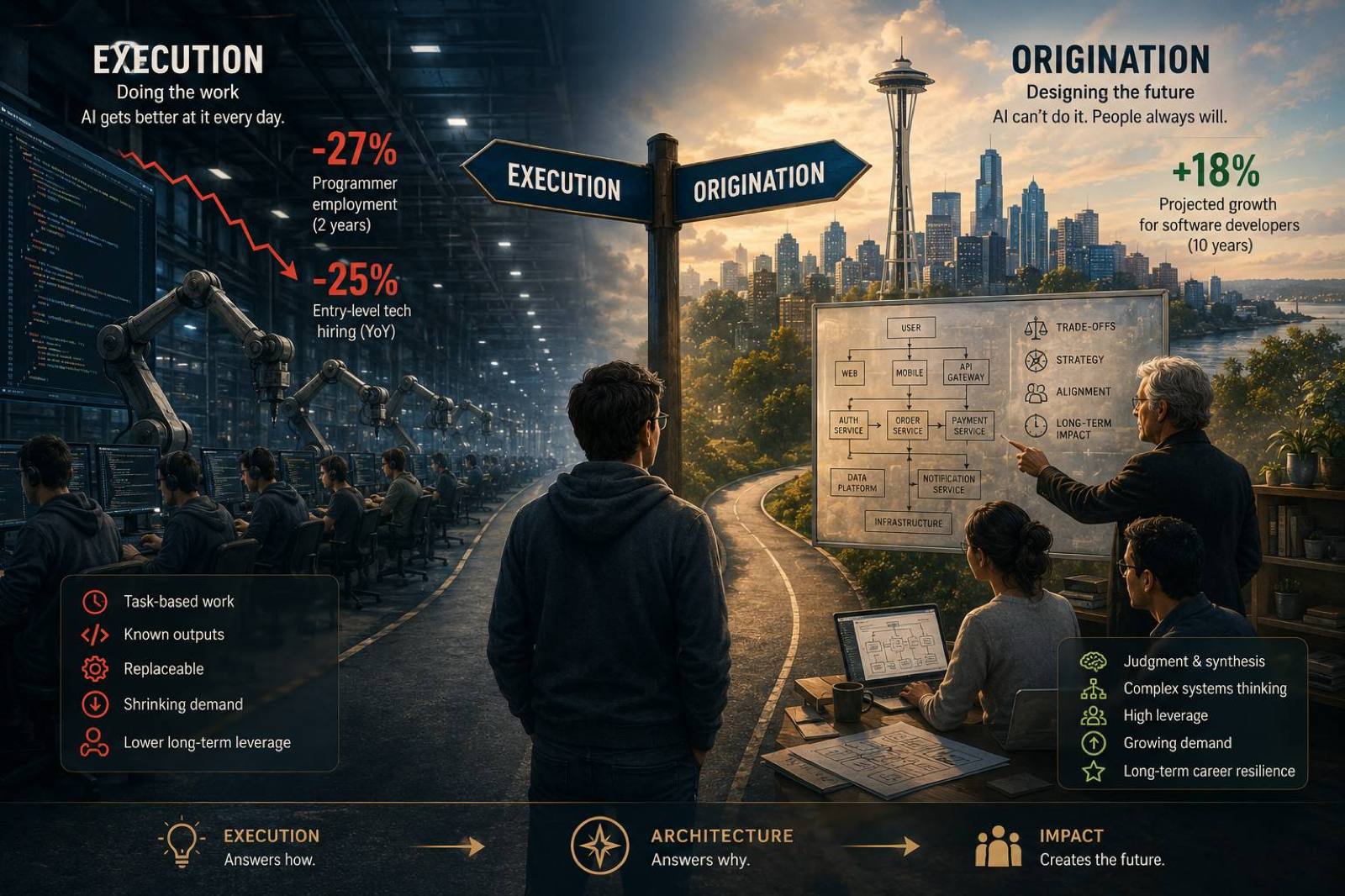 The Move From Execution To Origination
Programmer employment fell more than 27% over two years while the Bureau of Labor Statistics projects growth in design-oriented development roles. The real dividing line isn't AI versus humans — it's execution versus origination, and your career depends on which side you're building toward.
Read more → -
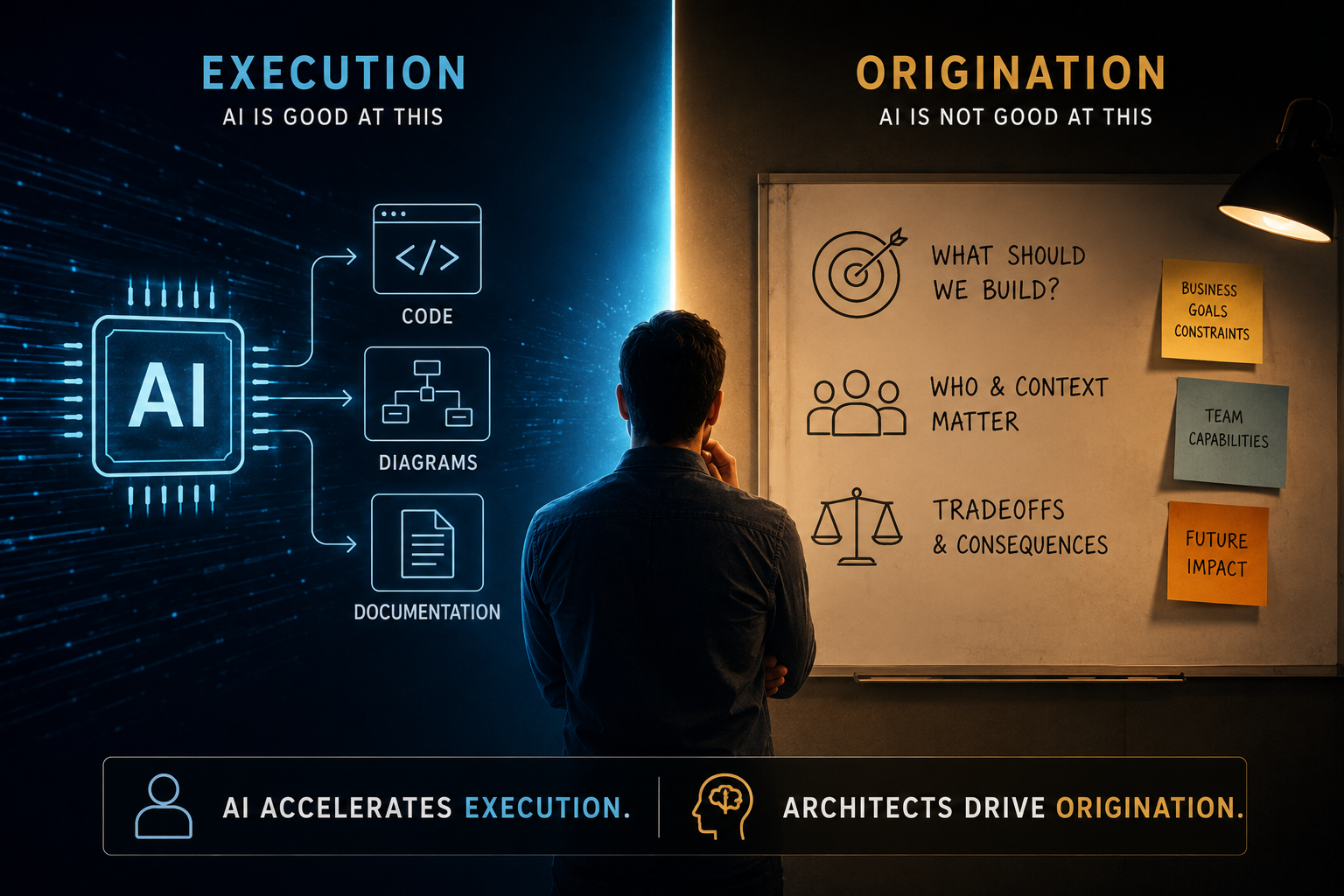 The Line AI Is Drawing in Your Architecture Team
Most software work sits on a spectrum from execution (implementing a decision already made) to origination (deciding what to build and why). AI is very good at the former and not at all good at the latter — and that asymmetry has real implications for how architecture teams should be structured.
Read more → -
 🤖 “We Need an AI Strategy!” What Your Boss Really Means...
When leadership demands an AI strategy, they usually mean "we need innovation" or "we don't want to fall behind." How architects turn that vague directive into concrete questions about business goals, data readiness, alternatives to AI, and who owns ongoing operational cost.
Read more → -
 Navigating AI Development with InWorld's Kylan Gibbs
InWorld AI CEO and founder Kylan Gibbs joins the podcast to talk conversational AI and where AI fits into modern software architecture.
Read more → -
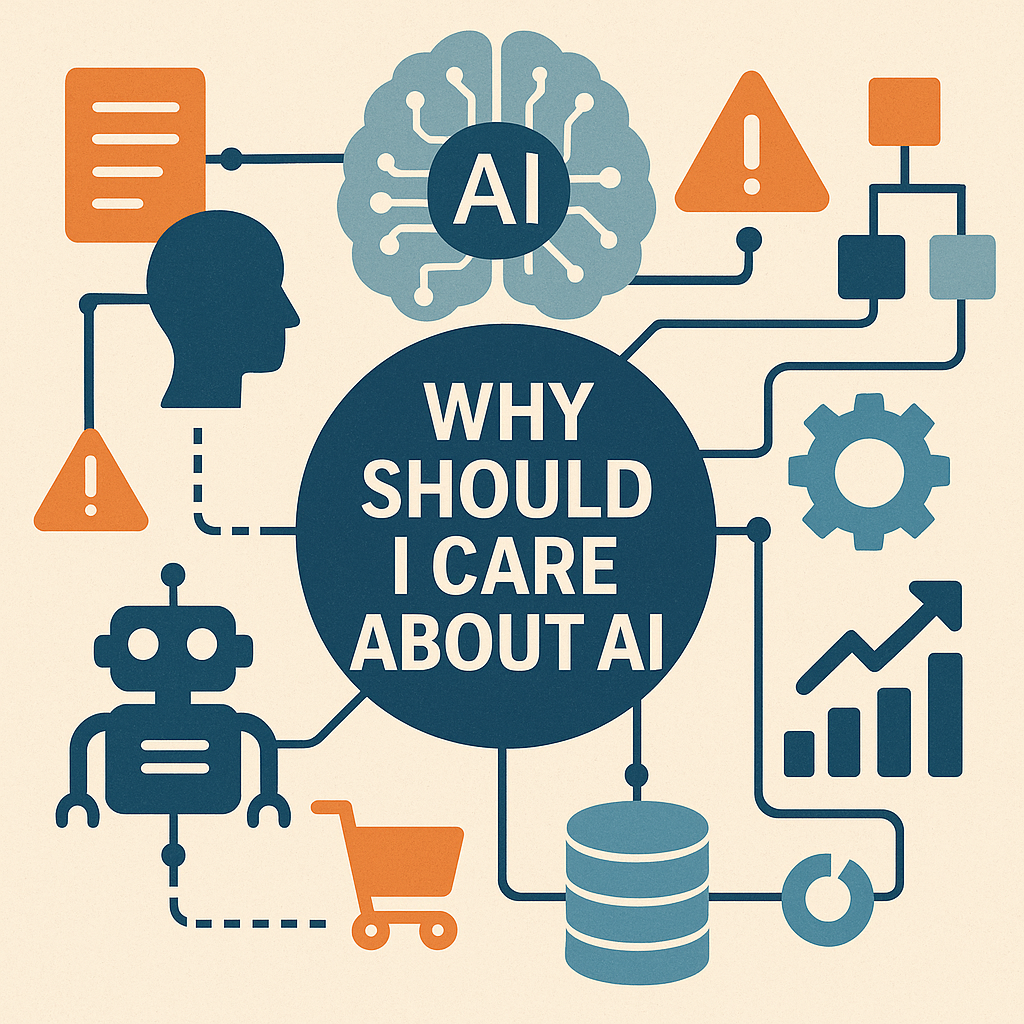 Why, exactly, should I care about AI?
AI has been around since the 1950s, but it's no longer optional knowledge for architects. Why data pipelines, AI model lifecycle management, probabilistic system boundaries, and ethics all become first-class architectural concerns once AI enters your stack.
Read more → -
 AI Hype vs Application Reality: How Architects Can Keep Their Products on Track in 2025
When leadership says "We need AI!", the architect's job is to translate that into a real strategy — not chase the buzzword. A practical checklist for evaluating AI requests, managing up, and accounting for the long-tail cost of maintaining what you build.
Read more → -
 Don’t Worry about AI Taking Over Your Job
Stanford's 2024 AI Index shows AI still can't match human performance on tasks needing complex cognition and emotional intelligence — why writers, actors, and lawyers will adapt and thrive rather than be replaced.
Read more → -
 AI Is Advancing, Yet Still Falls Short of Human Intelligence
Despite the superhuman-AI headlines, Stanford's 2024 AI Index shows AI still lags humans on tasks needing intuition and commonsense reasoning. The real opportunity is treating AI as a tool that augments human judgment, not a replacement for it.
Read more → -
Open-Source AI: Unlocking the Power of Collaboration and Innovation
Open-source foundation models jumped from a third to two-thirds of releases in two years, per Stanford's AI Index. Why that's democratizing AI development and improving transparency — and the governance and sustainability questions it raises.
Read more →