
Cloud Strategy & Economics
FinOps and cost governance, migration, repatriation, cloud maturity, vendor lock-in and portability, and how cloud costs behave differently from other business costs.
-
 Nobody Gets Promoted for Turning Things Off
Organizations reward launching and never reward retiring, so old systems pile up with no owner and no users. They cost complexity, security surface and cloud spend, and the cost compounds. How to retire a system safely, and how to change the incentives that keep them alive.
Read more → -
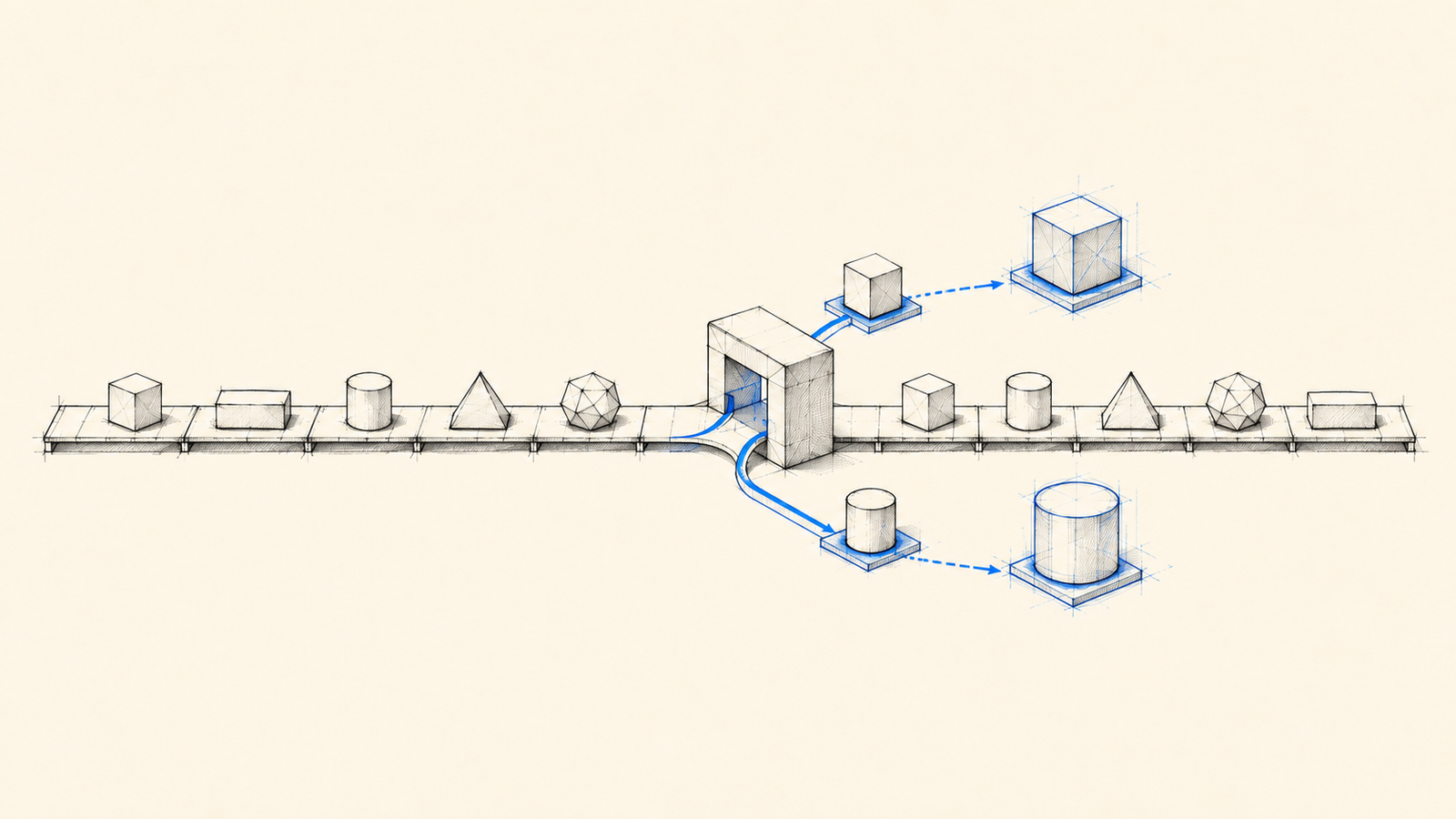 You Don't Have to Rewrite Everything
The cloud era had the six R's, and they mattered because they gave teams permission to leave most of the estate alone. AI-native needs the same thing more, because the pressure to declare everything AI-native comes from outside engineering. Four criteria that sort the estate, and three answers instead of one.
Read more → -
 You Didn't Change Anything. It Changed Anyway.
Services version on your schedule. Models drift, get deprecated, and improve on someone else's. Designing the boundary around a component you do not control, and the honest math on how much abstraction is worth paying for.
Read more → -
 Your Function Call Was Free. This One Isn't.
Distributed systems changed architecture because the network made a function call expensive. AI does it again, except the cost is money as well as latency. Model routing is an architectural decision, not an optimization you do later.
Read more → -
Managing Complexity in a Cloud Migration
Why complex applications make cloud migration risky, and how piecemeal (service-by-service) migration, chaos engineering, and static software-intelligence analysis reduce that risk before and after the move.
Read more → -
The Big Cloud Migration Misstep
Lift-and-shift feels like the safe first move into the cloud, but moving an application unchanged means paying for static resources instead of the cloud's real advantage: dynamic scaling. Why that shortcut can be the most expensive mistake in a migration.
Read more → -
You can’t afford not to be in the cloud
A CEO who compares cloud server pricing directly to on-prem server pricing is only looking at half the ledger. The real financial case for the cloud is dynamic resource allocation and a shift from capital expense to cost of goods sold.
Read more → -
Don’t stop your migration!
Application migrations rarely deliver benefits in a straight line — there's a painful low point where effort has gone up but nothing feels better yet. A real story of a company that quit at the bottom of that valley, and why sticking it out pays off.
Read more →